Choosing between NDA (National Defence Academy) and CDS (Combined Defence Services) is one of the most strategic decisions for any defence aspirant in India. Both pathways lead to prestigious officer roles in the Indian Armed Forces, but they differ significantly in eligibility, training approach, career trajectory, and competitive landscape.
This guide delivers a clear, decision-oriented comparison to help you align your choice with your long-term vision.
Overview: NDA vs CDS at a Glance
| Feature | NDA | CDS |
|---|---|---|
| Conducting Body | UPSC | UPSC |
| Entry Level | After Class 12 | After Graduation |
| Age Limit | 16.5 – 19.5 years | 19 – 25 years (varies by academy) |
| Gender | Male & Female | Male & Female |
| Training Academy | NDA, Khadakwasla + respective academies | Direct academy (IMA, INA, AFA, OTA) |
| Training Duration | ~4 years (3 NDA + 1 academy) | ~1–1.5 years |
| Exam Frequency | Twice a year | Twice a year |
| Entry Type | Early entry (foundation level) | Graduate entry (direct officer path) |
What is NDA?
The NDA exam is designed for students who aspire to join the defence forces right after completing their 12th standard. It is considered the earliest gateway to becoming an officer.
Key Highlights:
- Candidates join NDA in Khadakwasla for 3 years of joint training
- After NDA, cadets move to:
- IMA (Army)
- INA (Navy)
- AFA (Air Force)
- Focus on academic + physical + leadership development
Ideal Candidate Profile:
- Early clarity about defence career
- Strong discipline and adaptability at a young age
- Willingness to commit long-term
What is CDS?
The CDS exam is targeted at graduates who want to join the armed forces as officers after completing their degree.
Key Highlights:
- Direct entry into training academies:
- IMA (Indian Military Academy)
- INA (Indian Naval Academy)
- AFA (Air Force Academy)
- OTA (Officers Training Academy)
- Shorter training duration
- More maturity and specialization due to graduation
Ideal Candidate Profile:
- Graduates seeking structured career entry
- Individuals who want backup options (corporate/other fields)
- Candidates with developed analytical and decision-making skills
Eligibility Comparison
| Criteria | NDA | CDS |
|---|---|---|
| Education | 12th pass (PCM for Air Force/Navy) | Graduation (specific streams for some) |
| Age | 16.5 – 19.5 | 19 – 25 |
| Marital Status | Unmarried | Mostly unmarried |
| Physical Fitness | Mandatory | Mandatory |
Exam Pattern Breakdown
NDA Exam Pattern
| Subject | Marks |
|---|---|
| Mathematics | 300 |
| GAT | 600 |
| Total | 900 |
- GAT includes English + General Knowledge
- More focus on basic concepts + speed
CDS Exam Pattern
| Academy | Subjects | Total Marks |
|---|---|---|
| IMA/INA/AFA | English, GK, Maths | 300 |
| OTA | English, GK | 200 |
- CDS is more conceptual and analytical
- Graduation-level questions
Training Philosophy: NDA vs CDS
| Aspect | NDA | CDS |
|---|---|---|
| Training Style | Holistic (academic + military) | Pure military training |
| Duration | Long-term (4 years total) | Short-term (1–1.5 years) |
| Peer Environment | Young cadets (16–18 yrs) | Mature graduates |
| Leadership Growth | Built from scratch | Refined & applied |
Career Trajectory
NDA Route:
- Longer grooming period
- Strong foundation in leadership
- Often seen as elite grooming pipeline
CDS Route:
- Faster entry into officer role
- More mature decision-making
- Ideal for late decision-makers
Competitive Landscape
| Factor | NDA | CDS |
|---|---|---|
| Competition Level | High (young aspirants) | Very High (graduates + repeaters) |
| Difficulty Level | Moderate | Moderate to High |
| Selection Ratio | Low | Lower |
Strategic Decision Framework
Choose NDA if:
- You are in Class 11/12
- You are 100% committed to defence
- You want early exposure and long-term grooming
- You are physically and mentally prepared early
Choose CDS if:
- You are a graduate or pursuing graduation
- You want a backup career option
- You matured into defence interest later
- You prefer shorter training duration
NDA vs CDS: Which is Better?
There is no absolute “better” option — it is purely context-driven.
| Scenario | Better Choice |
|---|---|
| Early clarity & dedication | NDA |
| Late decision / backup needed | CDS |
| Long-term grooming | NDA |
| Quick entry into service | CDS |
Expert Insight (Strategic View)
From a career ROI perspective:
- NDA = Long-term investment with high leadership ROI
- CDS = Efficient entry with faster deployment
If your vision is to build a high-impact defence career with deep leadership roots, NDA gives a stronger foundation.
If your goal is to enter the forces efficiently while keeping optionality, CDS is the smarter route.
Recommended Books
Below are high-conversion, evergreen books you can integrate with your Amazon affiliate strategy:
NDA Preparation Books
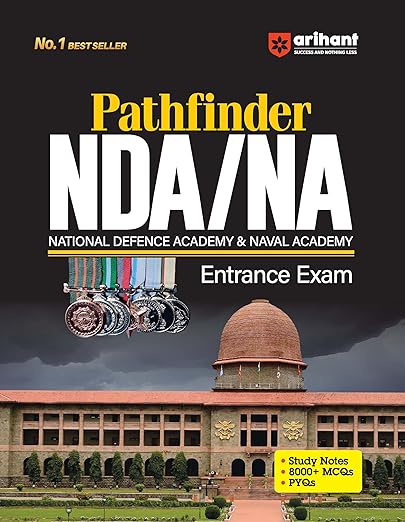
Arihant Pathfinder NDA/NA Entrance Exam Book 2025

Mathematics for NDA NA (National Defence Academy & Naval Academy) Entrance Exam Preparation 2025-2026

Arihant Objective General English by S.P. Bakshi - CDS, NDA, SSC, Banking, MCA, B.Ed. Entrance & Other Exams

Lucent's General Knowledge 2026 - English
CDS Preparation Books

Arihant Pathfinder CDS OTA Entrance Exam

CDS OTA Guide
Arihant Objective General English by S.P. Bakshi - CDS, NDA, SSC, Banking, MCA, B.Ed. Entrance & Other Exams

Quantitative Aptitude (Revised Edition 2025): For All Govt. Competitive Exams for Banking, SSC CGL CHSL MTS GD, RRB Railway, Police, UPSC Civil Service, IBPS, SBI BANK PO
SSB Interview Preparation (Common for Both)

Let's Crack SSB Interview by SSB Crack

Psychology Tests for SSB by Dr. N.K. Natarajan

SSB Interview Guide by Arihant
Final Takeaway
Your decision should not be based on “which is easier” — but on which aligns with your life stage, risk appetite, and long-term mission.
- NDA is a commitment-driven leadership pipeline
- CDS is a strategic entry point with flexibility
Choose with clarity, prepare with discipline, and execute with consistency.
If you want, I can also convert this into a high-converting SEO blog format with keywords + schema + affiliate CTA placements to maximize traffic and revenue.