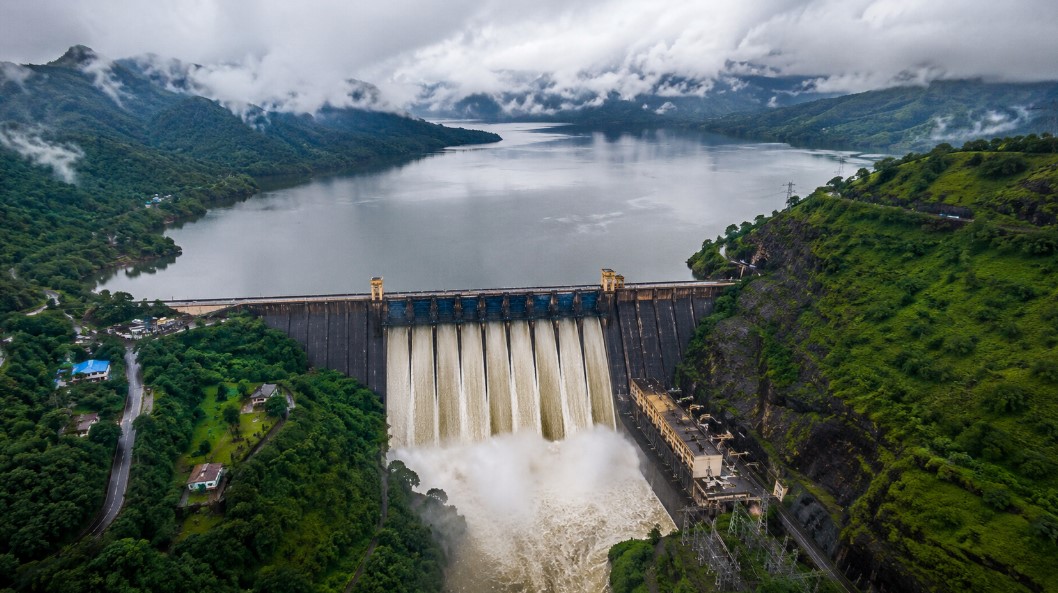
Maharashtra is known not only for its industrial development and historical heritage but also for its extensive network of dams. The state has the highest number of large dams in India and plays a leading role in irrigation, hydroelectricity generation, urban water supply, and drought management. These dams are among the most important infrastructure projects in the state and are frequently asked about in competitive examinations such as MPSC, Talathi, ZP Bharti, Police Bharti, SSC, Railway, and other state-level exams.
Understanding Maharashtra’s dams is important because many questions are based on their location, rivers, purposes, reservoirs, and special features. Several dams are also linked with important historical events, environmental studies, and regional development.
Why Maharashtra Has So Many Dams
The geography of Maharashtra makes dam construction extremely important. The Sahyadri Mountains (Western Ghats) divide the state into two major regions:
- The Konkan region receives heavy rainfall but has short rivers flowing rapidly toward the Arabian Sea.
- The Deccan Plateau receives seasonal rainfall and faces water scarcity during summer.
To store monsoon water and ensure year-round supply, Maharashtra developed thousands of dams across major rivers such as:
These dams support agriculture, industries, drinking water supply, and power generation.
Types of Dams in Maharashtra
1. Gravity Dams
These dams are made from concrete or masonry and resist water pressure using their own weight.
Examples
- Koyna Dam
- Bhandardara Dam
- Radhanagari Dam
2. Earthfill Dams
These dams are built using compacted soil, rock, and earth material. They are wider and suitable for large river valleys.
Examples
- Jayakwadi Dam
- Ujani Dam
- Isapur Dam
Koyna Dam – Lifeline of Maharashtra
The Koyna Dam is one of the most important hydroelectric projects in India. It is located in Satara district on the Koyna River, which is a tributary of the Krishna River.
Completed in 1964, the dam transformed Maharashtra’s electricity sector and became a backbone of industrial development.
Important Facts
| Feature | Details |
|---|---|
| River | Koyna River |
| District | Satara |
| Type | Gravity Dam |
| Height | 103 meters |
| Main Purpose | Hydroelectricity |
| Reservoir | Shivsagar Lake |
Unique Features
- First dam in Asia to use “Lake Tapping” technology.
- Major source of hydroelectric power in Maharashtra.
- The reservoir extends nearly 50 km.
Koyna Earthquake (1967)
The 1967 Koyna earthquake is a very important GK topic. It measured 6.6 on the Richter scale and is considered one of the world’s major examples of Reservoir-Induced Seismicity (RIS).
Despite the earthquake, the dam remained structurally stable.
# Jayakwadi Dam – The Giant of MarathwadaJayakwadi Dam is situated at Paithan in Chhatrapati Sambhaji Nagar district on the Godavari River. It is among the largest earthen dams in India.
The project was developed mainly to solve drought problems in Marathwada.
Important Facts
| Feature | Details |
|---|---|
| River | Godavari |
| District | Chhatrapati Sambhaji Nagar |
| Type | Earthfill Dam |
| Reservoir | Nathsagar |
| Year Completed | 1976 |
Importance
- Irrigates large agricultural areas.
- Supports sugarcane and cotton farming.
- Provides drinking water to nearby cities.
Special Attractions
- Jayakwadi Bird Sanctuary
- Dnyaneshwar Udyan
- Migratory flamingos during winter
Ujani Dam – Backbone of Solapur Region
Ujani Dam is constructed on the Bhima River in Solapur district. It is also called Bhima Dam.
The dam plays a major role in irrigation and drought management.
Important Facts
| Feature | Details |
|---|---|
| River | Bhima |
| District | Solapur |
| Type | Earthfill-cum-Gravity |
| Purpose | Irrigation and Water Supply |
Key Importance
- Supports sugar industries in Solapur.
- Important for fisheries.
- Known for flamingo migration.
The dam has high dead storage capacity, which helps maintain water availability even during low rainfall years.
Radhanagari Dam – Vision of Chhatrapati Shahu Maharaj
Radhanagari Dam in Kolhapur district is one of Maharashtra’s historic irrigation projects.
It was initiated by Chhatrapati Shahu Maharaj for farmers’ welfare and rural development.
Important Facts
| Feature | Details |
|---|---|
| River | Bhogawati |
| District | Kolhapur |
| Type | Gravity Dam |
| Year Completed | 1954 |
Unique Feature
The dam is famous for its Automatic Siphon Gates. These gates operate automatically without electricity or human intervention when water reaches a certain level.
This engineering system became famous across India.
Bhandardara Dam – Pride of Ahmednagar
Bhandardara Dam, also called Wilson Dam, is located on the Pravara River in Ahmednagar district.
It is one of the oldest dams in Maharashtra.
Important Facts
| Feature | Details |
|---|---|
| River | Pravara |
| District | Ahmednagar |
| Year Completed | 1926 |
| Type | Gravity Dam |
Famous Attractions
- Arthur Lake
- Umbrella Falls
- Trekking routes near Kalsubai Peak
The scenic beauty around the reservoir makes it a major tourism destination.
Khadakwasla Dam – Pune’s Water Lifeline
Khadakwasla Dam is built on the Mutha River near Pune city. It forms part of Pune’s important water supply system.
Historical Importance
The dam became widely known after the 1961 Panshet Dam disaster. Heavy flooding caused damage to Pune city when Panshet Dam burst and water rushed toward Khadakwasla.
The structure was later strengthened and rebuilt.
Importance Today
- Drinking water supply for Pune
- Irrigation
- Tourism and recreation
Mumbai’s Dam Network
Mumbai depends on a network of dams and lakes located mainly in Thane and Nashik districts.
Major Water Sources of Mumbai
| Dam/Lake | River |
|---|---|
| Bhatsa | Bhatsa River |
| Tansa | Tansa River |
| Modak Sagar | Vaitarna River |
| Upper Vaitarna | Vaitarna River |
| Tulsi | Local catchment |
| Vihar | Local catchment |
Among these, Bhatsa Dam is the largest water supplier to Mumbai.
Other Important Dams in Maharashtra
| Dam | River | District | Importance |
|---|---|---|---|
| Totladoh | Pench | Nagpur | Hydroelectricity |
| Isapur | Penganga | Nanded | Large earthfill dam |
| Mulshi | Mula | Pune | Tata hydroelectric project |
| Dhom | Krishna | Satara | Irrigation |
| Yeldari | Purna | Parbhani | Marathwada irrigation |
| Manjara | Manjara | Beed | Drought relief |
| Tillari | Tillari | Sindhudurg | Water supply and power |
| Bhatsa | Bhatsa | Thane | Mumbai water source |
| Hatnur | Tapi | Jalgaon | Irrigation project |
| Pawana | Pawana | Pune | Water supply and electricity |
Importance of Dams in Maharashtra
1. Irrigation
Most dams were built to support agriculture in drought-prone areas such as:
- Marathwada
- Vidarbha
- Western Maharashtra
They help farmers cultivate crops throughout the year.
2. Hydroelectricity
Projects like Koyna, Mulshi, and Totladoh produce electricity for industries and households.
3. Drinking Water Supply
Cities such as Mumbai, Pune, Nashik, and Solapur depend heavily on dam reservoirs.
4. Fisheries and Tourism
Reservoirs support:
- Inland fishing
- Boating
- Eco-tourism
- Bird sanctuaries
Many dams attract tourists during monsoon season.
Challenges Associated with Dams
Although dams are beneficial, they also create several issues.
Rehabilitation Problems
Thousands of families were displaced due to large reservoir projects.
Siltation
Over time, reservoirs lose storage capacity because of silt deposits.
Water Sharing Conflicts
Disputes often arise between regions over water allocation.
Important Exam-Oriented Points
- Maharashtra has the highest number of large dams in India.
- Koyna Dam is famous for hydroelectricity and lake tapping.
- Jayakwadi Dam forms the Nathsagar reservoir.
- Radhanagari Dam is known for automatic siphon gates.
- Bhatsa Dam is Mumbai’s largest water source.
- Ujani Dam is famous for flamingos.
- Bhandardara Dam is one of the oldest dams in Maharashtra.
Dams are among Maharashtra’s greatest engineering achievements. They have transformed agriculture, supported industries, generated electricity, and ensured water security for millions of people. From the massive Koyna project in Satara to the historic Radhanagari Dam in Kolhapur, every dam has its own geographical, economic, and historical importance.
For competitive exam preparation, students should mainly focus on:
- River name
- District
- Dam type
- Reservoir name
- Special feature
A clear understanding of these points can help solve many Static GK questions in examinations.